
Plus AI Feature
Dreading the hours it takes to manually draw system architecture diagrams? Check out these Technology Prompt Ideas for Nano Banana to instantly generate cloud infrastructure layouts, software engineering flows, and detailed technical schemas. Nano Banana Pro is exceptional at rendering text within images, so your labels and annotations will come out sharp and spelled correctly. These are lifesavers for engineering syncs or explaining the "how it works" slide to leadership.
29 prompts
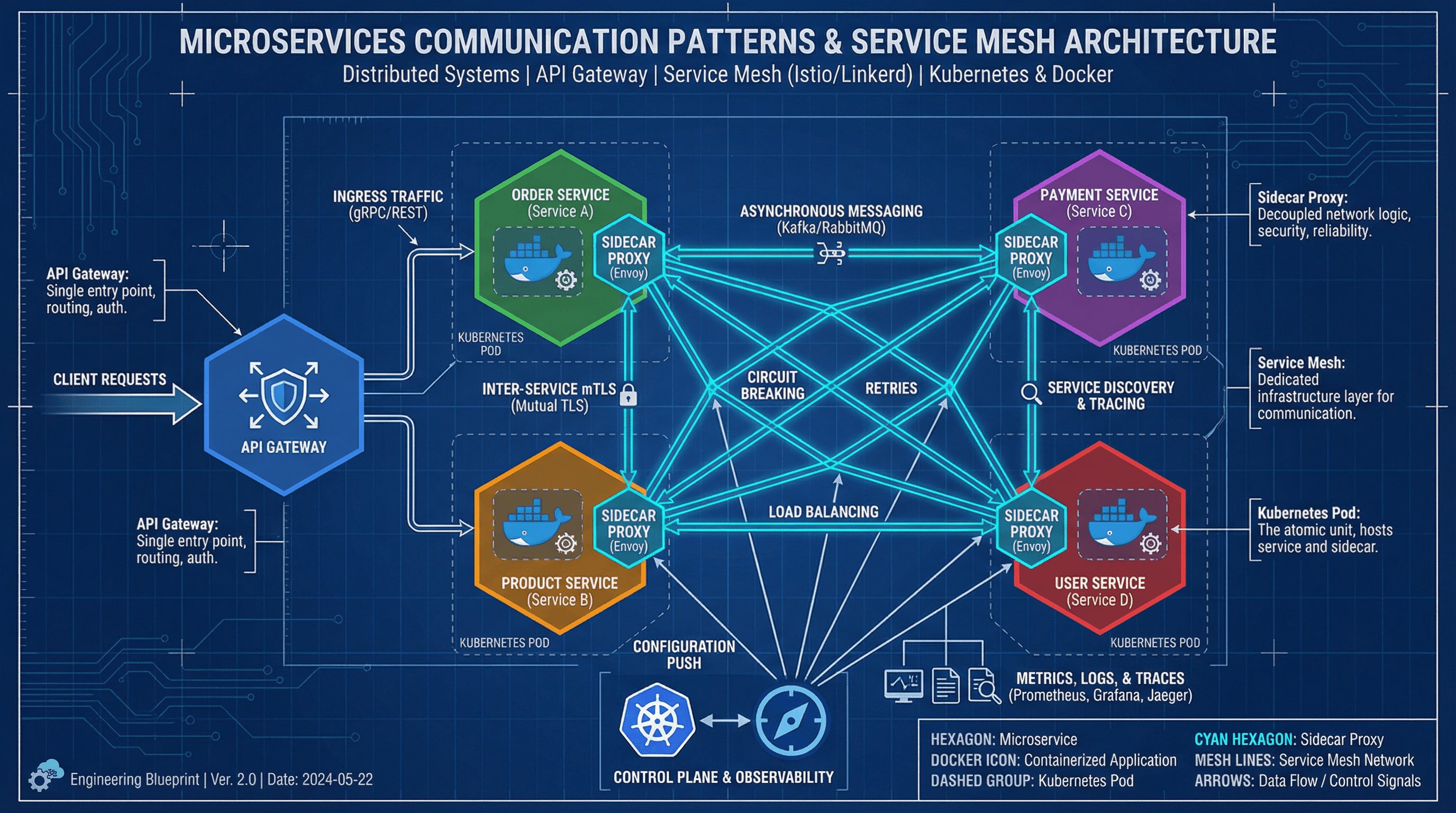
Design a technical slide showing microservices communication patterns and service mesh. Use a distributed systems style with hexagonal service containers in various colors, API gateway graphics, mesh network connection lines, Docker container icons, Kubernetes pod groupings, technical blueprint aesthetic, and clean engineering typography.
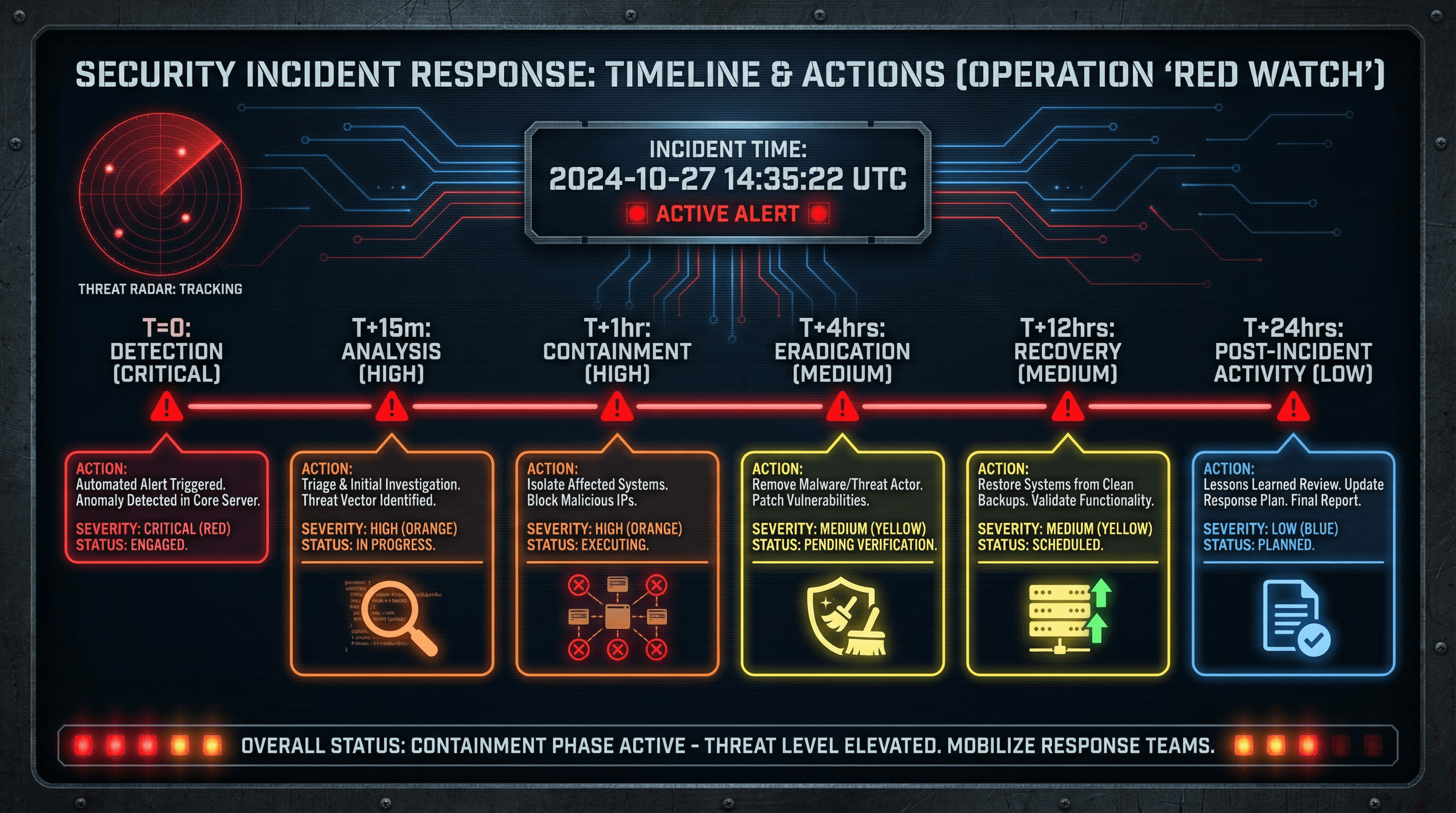
Create a slide showing the timeline and actions during a security incident response. Use a war room command center aesthetic with dark background, red alert timeline markers, clock and timestamp graphics, severity level color coding, radar sweep animations, military-inspired stencil fonts, and urgent status indicator styling.
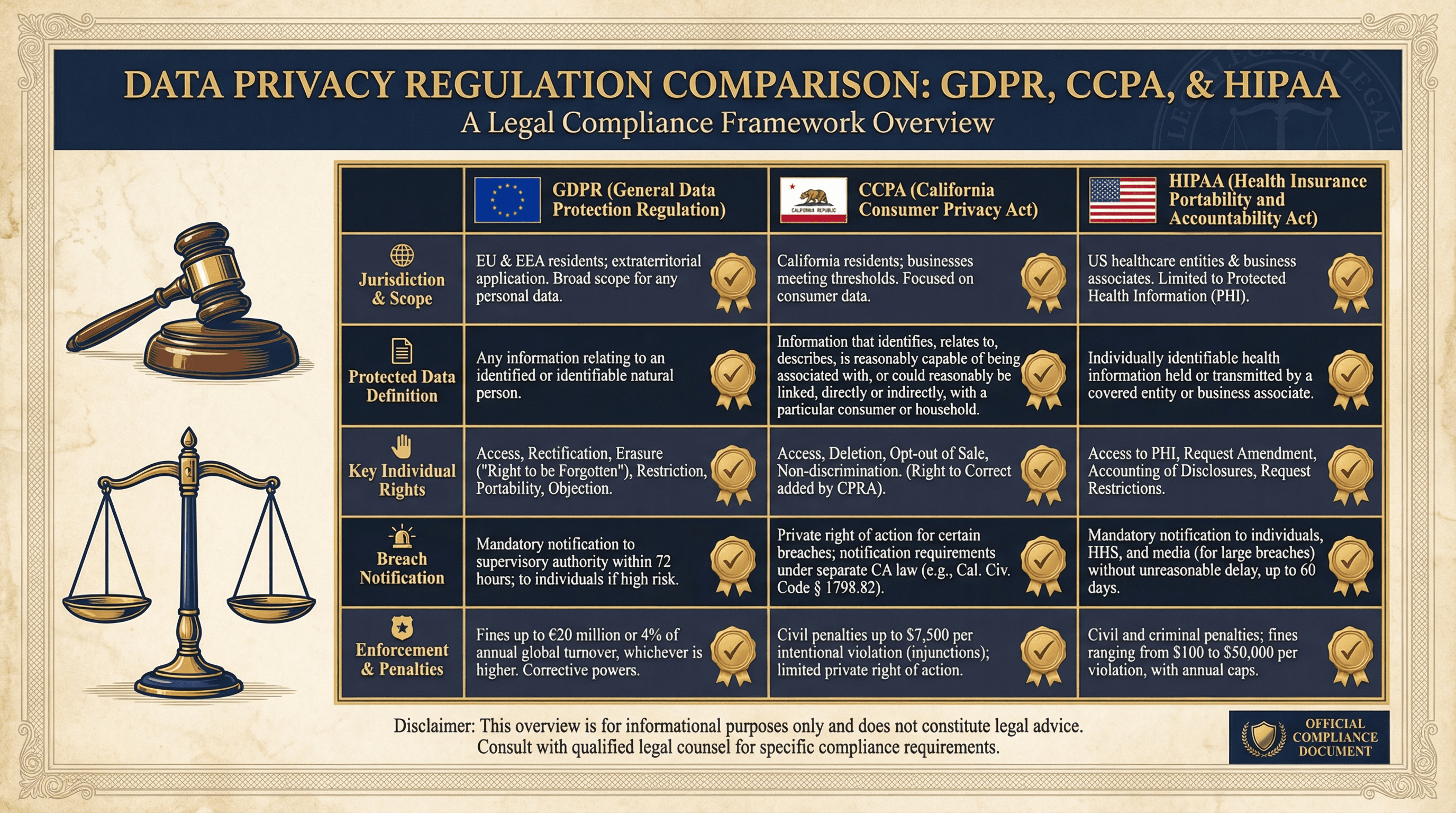
Design a slide comparing GDPR, CCPA, and HIPAA data privacy requirements. Use a legal compliance aesthetic with official document styling, comparison table with checkmarks and X marks, flag icons for jurisdictions, gavel and scale of justice graphics, formal navy and gold colors, and authoritative Times New Roman serif typography.
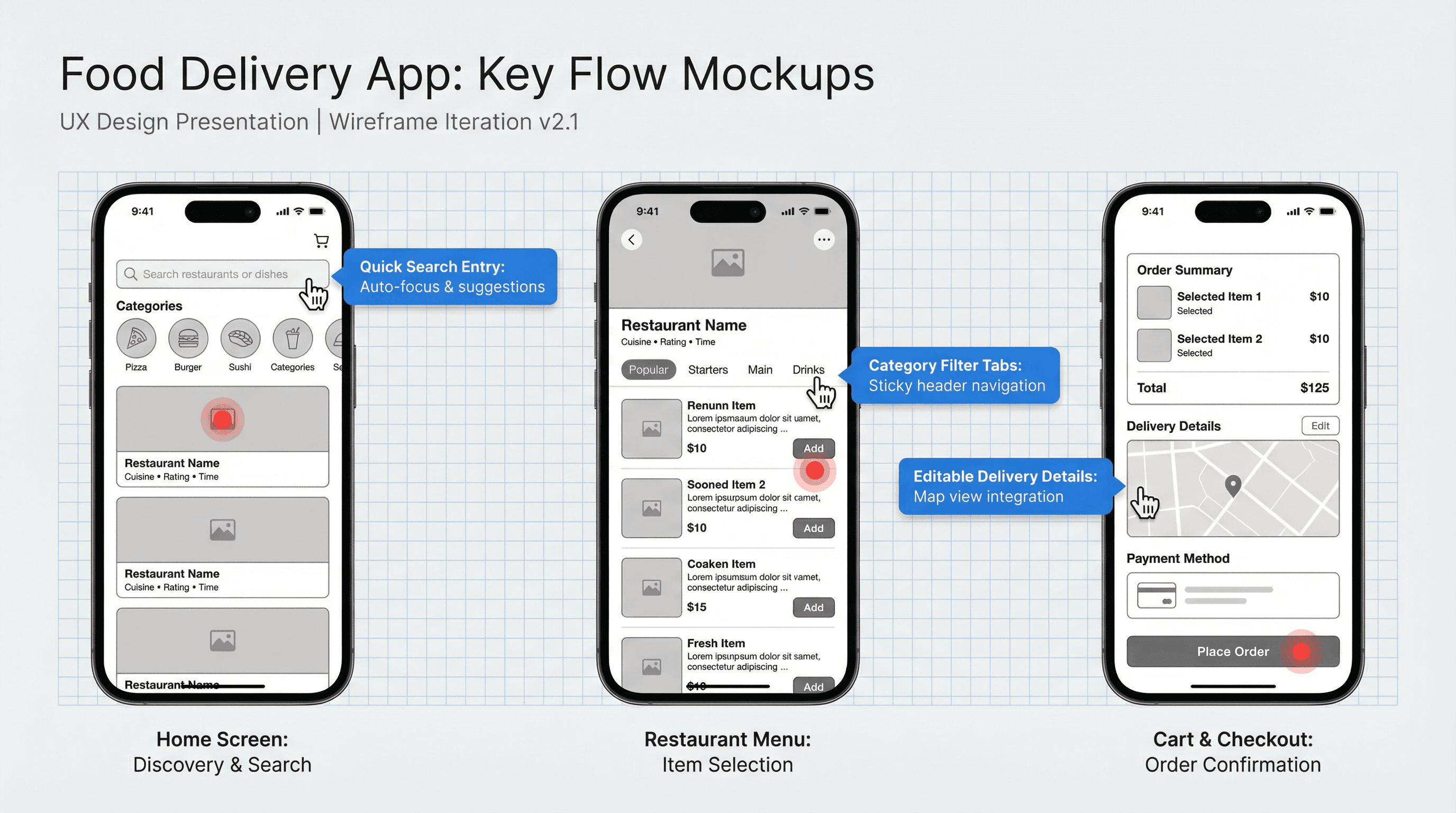
Create a slide showing key screen mockups for a food delivery mobile application. Design in a UX design presentation style with iPhone device frames, clean grayscale wireframes with blue annotation callouts, hand cursor interaction indicators, grid overlay showing spacing, red hotspot markers, and design system typography labels.
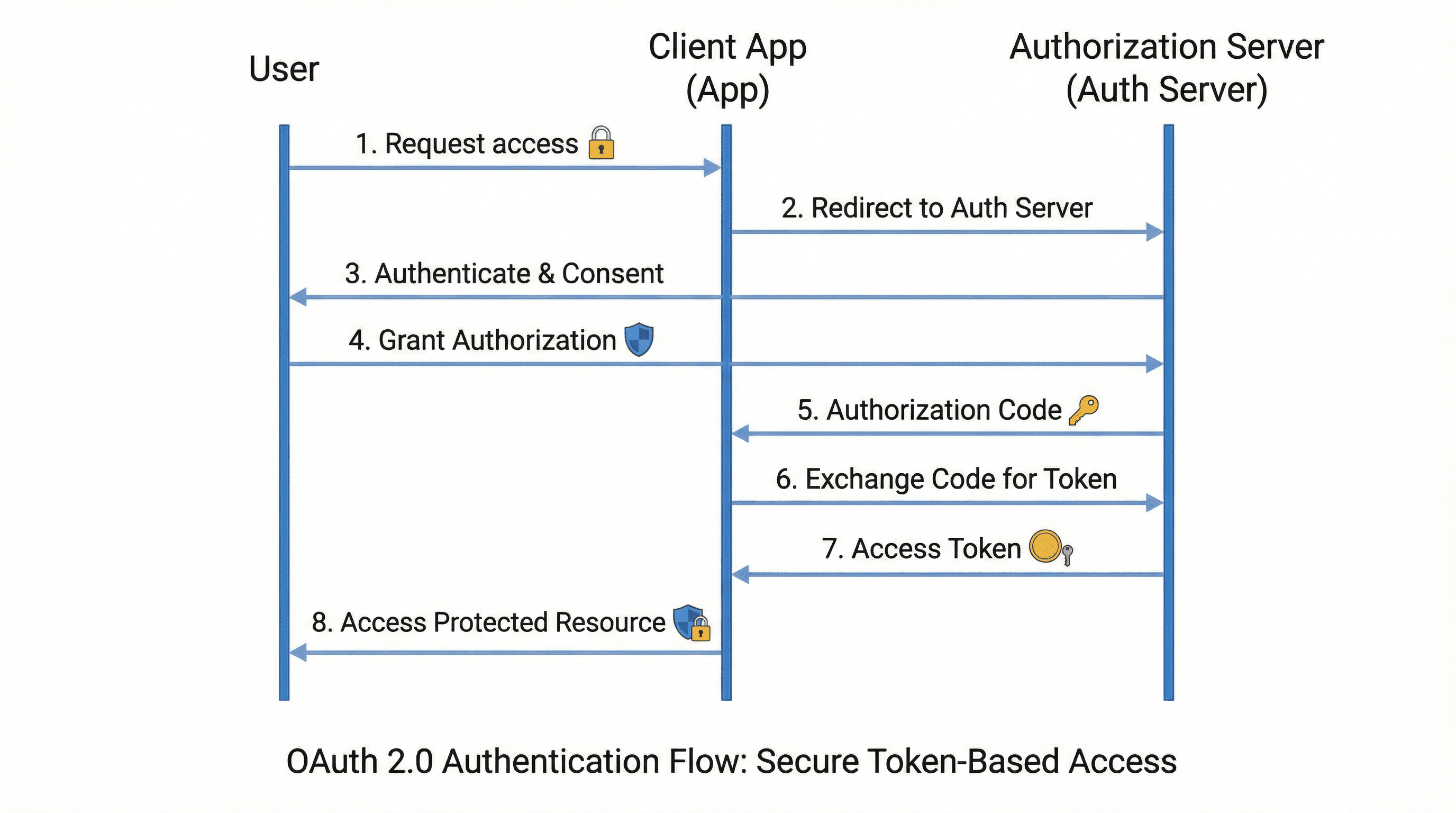
Design a sequence diagram slide showing OAuth 2.0 authentication process. Use a security protocol style with vertical swimlanes for each actor (User, App, Auth Server), numbered step arrows, token and key graphics, padlock and shield icons, clean white background with subtle blue accents, and technical documentation typography.
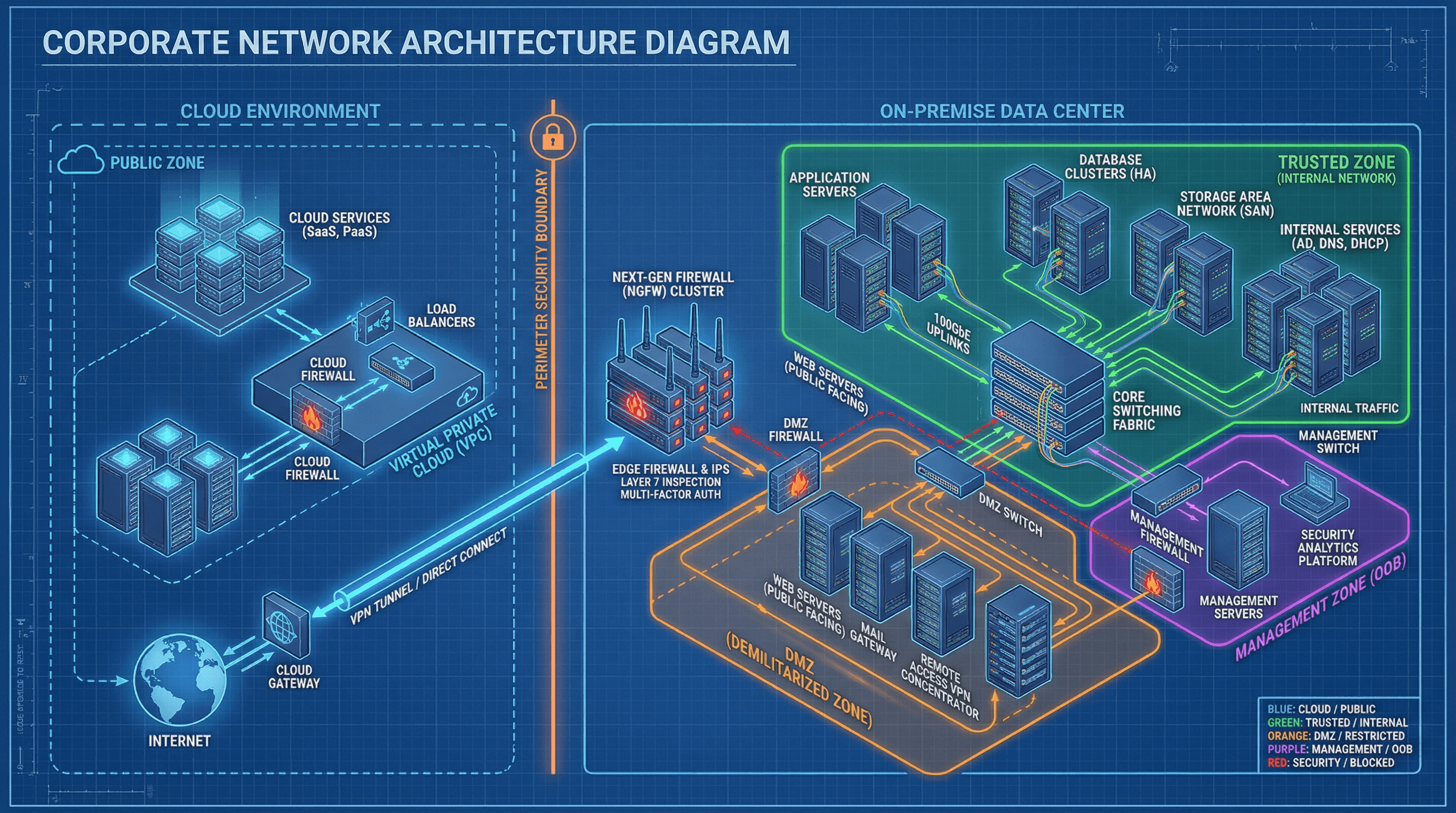
Create a slide showing corporate network architecture with servers and firewalls. Design in a technical infrastructure style with isometric 3D rack servers and network devices, connection lines showing data paths, security zone boundaries in different colors, cloud and on-premise separation, blueprint grid background, and precise engineering typography.
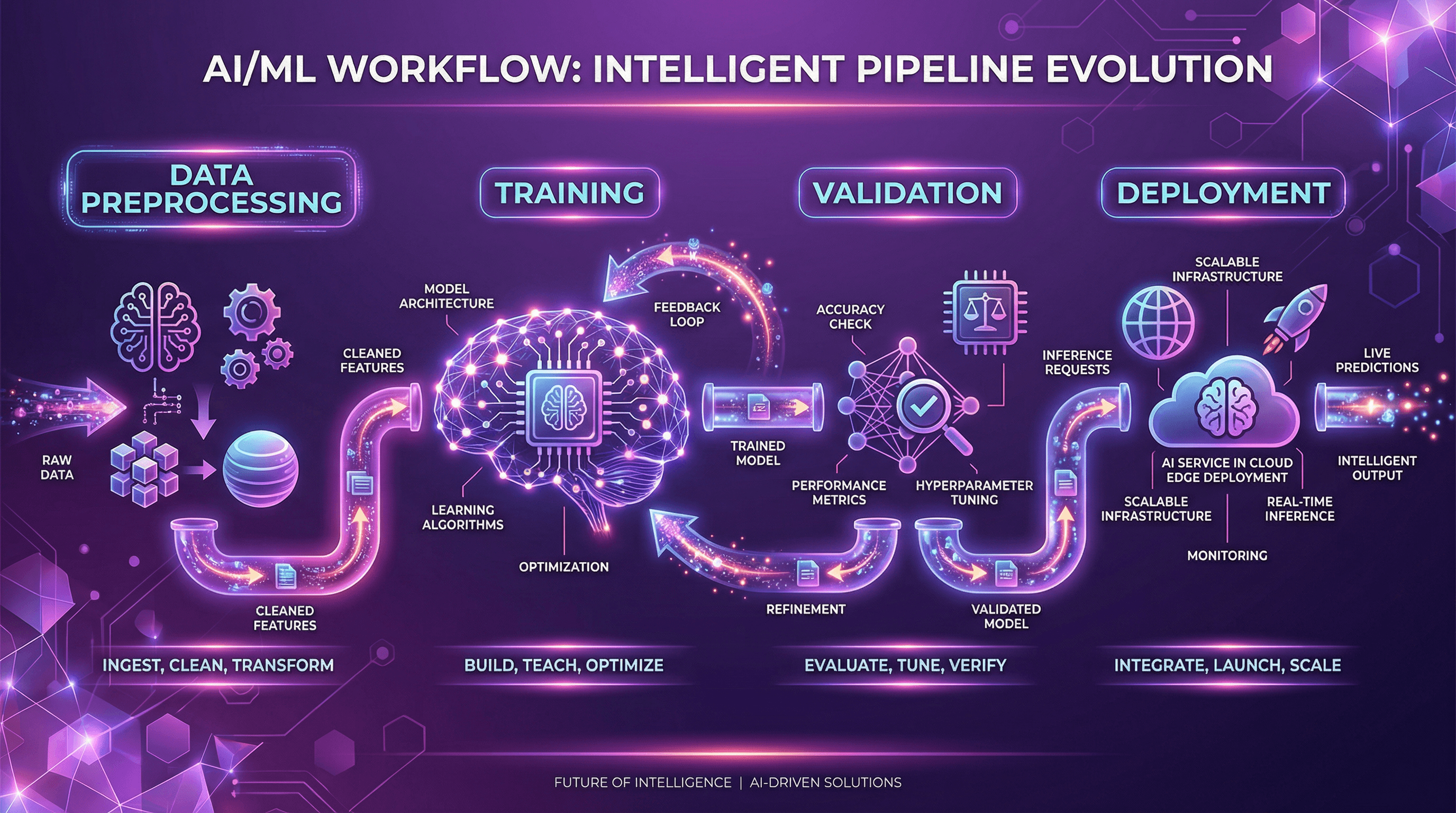
Design a flowchart slide showing data preprocessing, training, validation, and deployment. Use an AI/ML aesthetic with neural network node graphics, gradient purple to pink futuristic colors, data flow tubes with particle effects, brain and chip iconography, abstract geometric backgrounds, and cutting-edge tech typography with subtle glow.
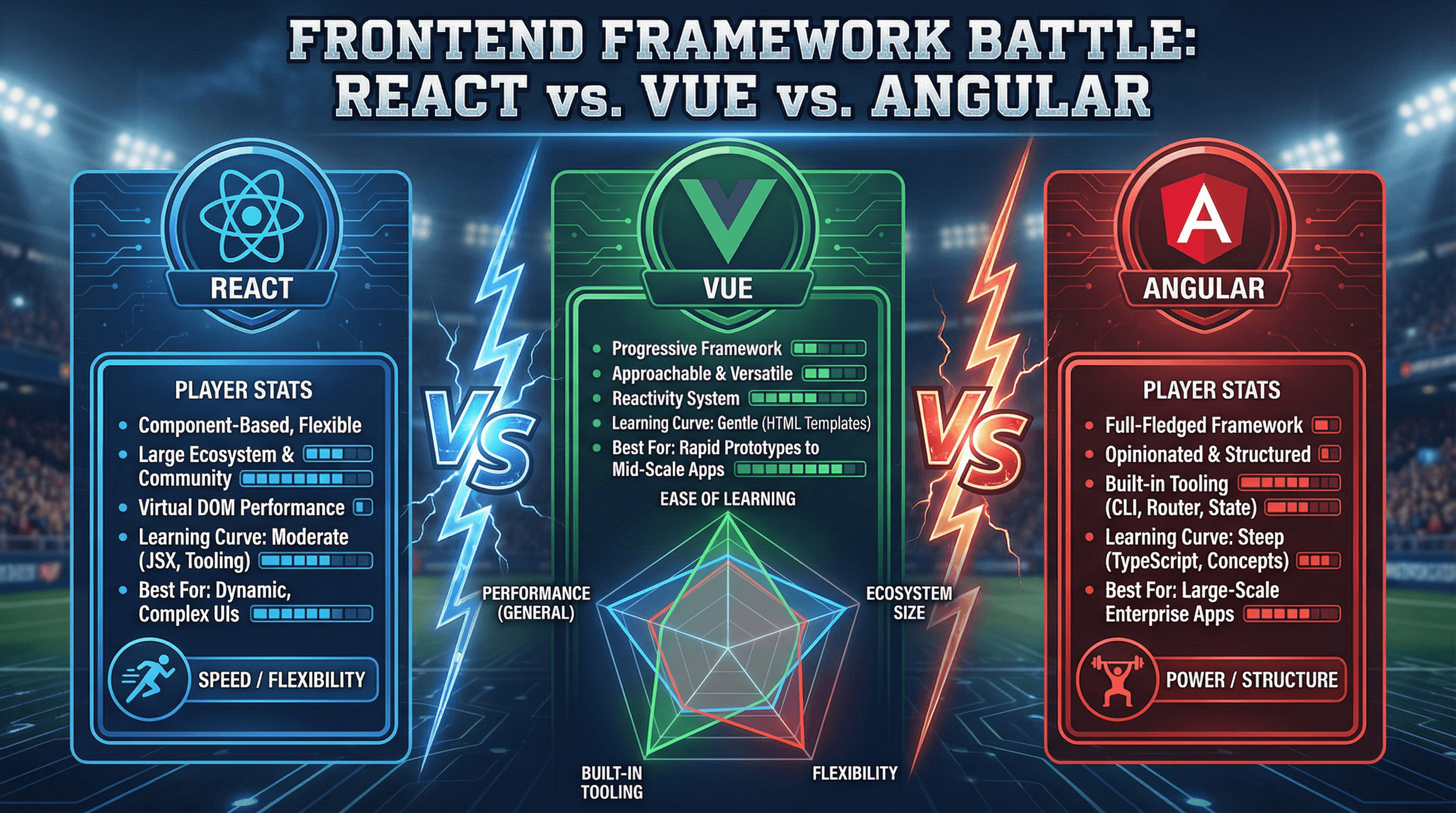
Create a comparison slide evaluating React vs Vue vs Angular for frontend development. Design in a versus battle style with each framework in its brand colors (React blue, Vue green, Angular red), side-by-side comparison cards, radar chart showing strengths, VS lightning bolt graphics, competitive sports aesthetic, and bold header typography.
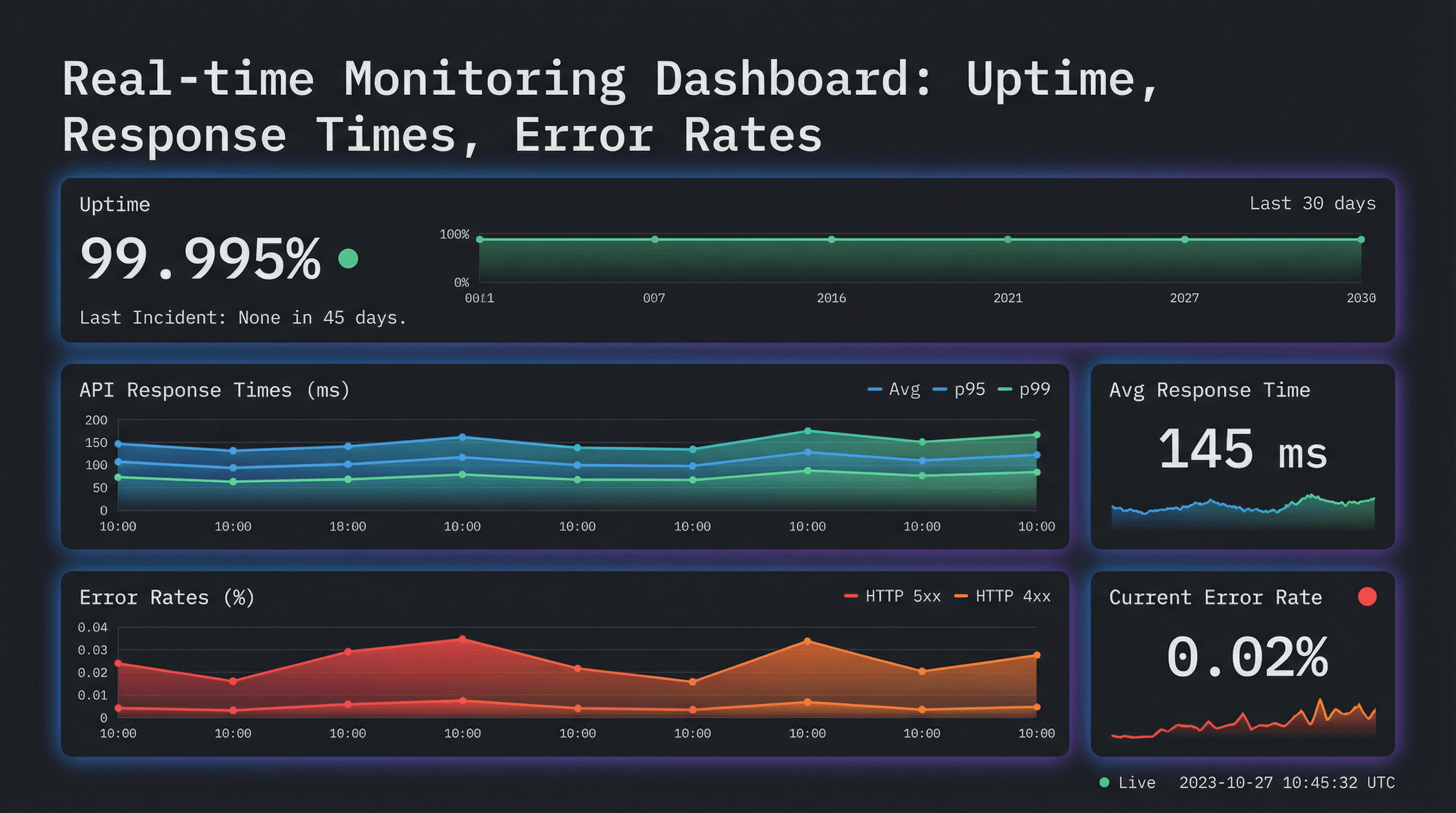
Design a metrics dashboard slide showing uptime, response times, and error rates. Use a monitoring tool aesthetic inspired by Grafana/Datadog with dark theme background, real-time chart widgets with gradient fills, status indicator dots (green/yellow/red), sparkline mini-graphs, metric cards with large numbers, and data-focused monospace typography.
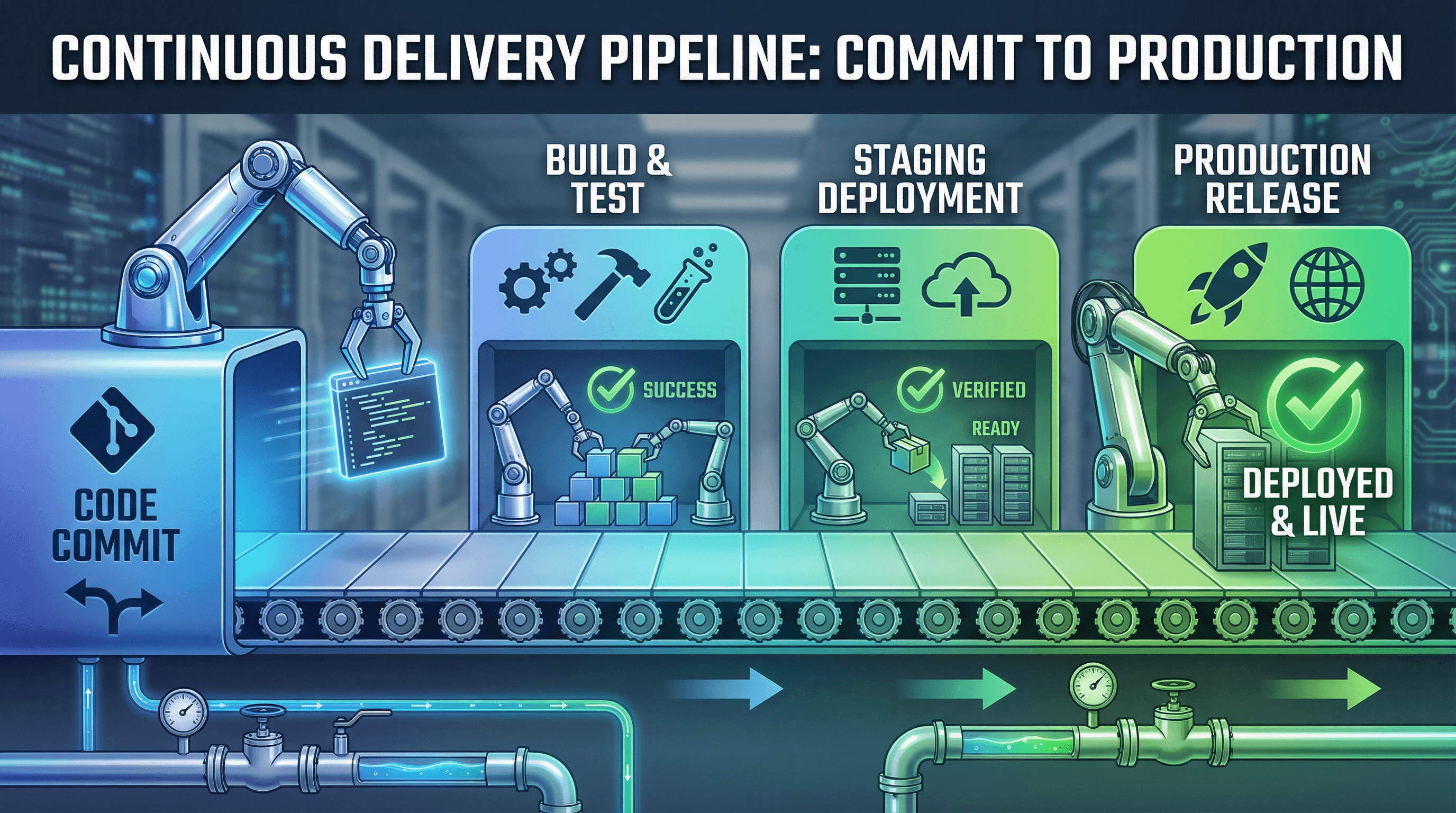
Create a CI/CD pipeline diagram slide showing code commit to production deployment. Design in a continuous delivery aesthetic with horizontal conveyor belt visual, stage containers in gradient blues and greens, automation robot arm graphics, success checkmark and build icons, industrial pipeline imagery, and bold impactful typography.
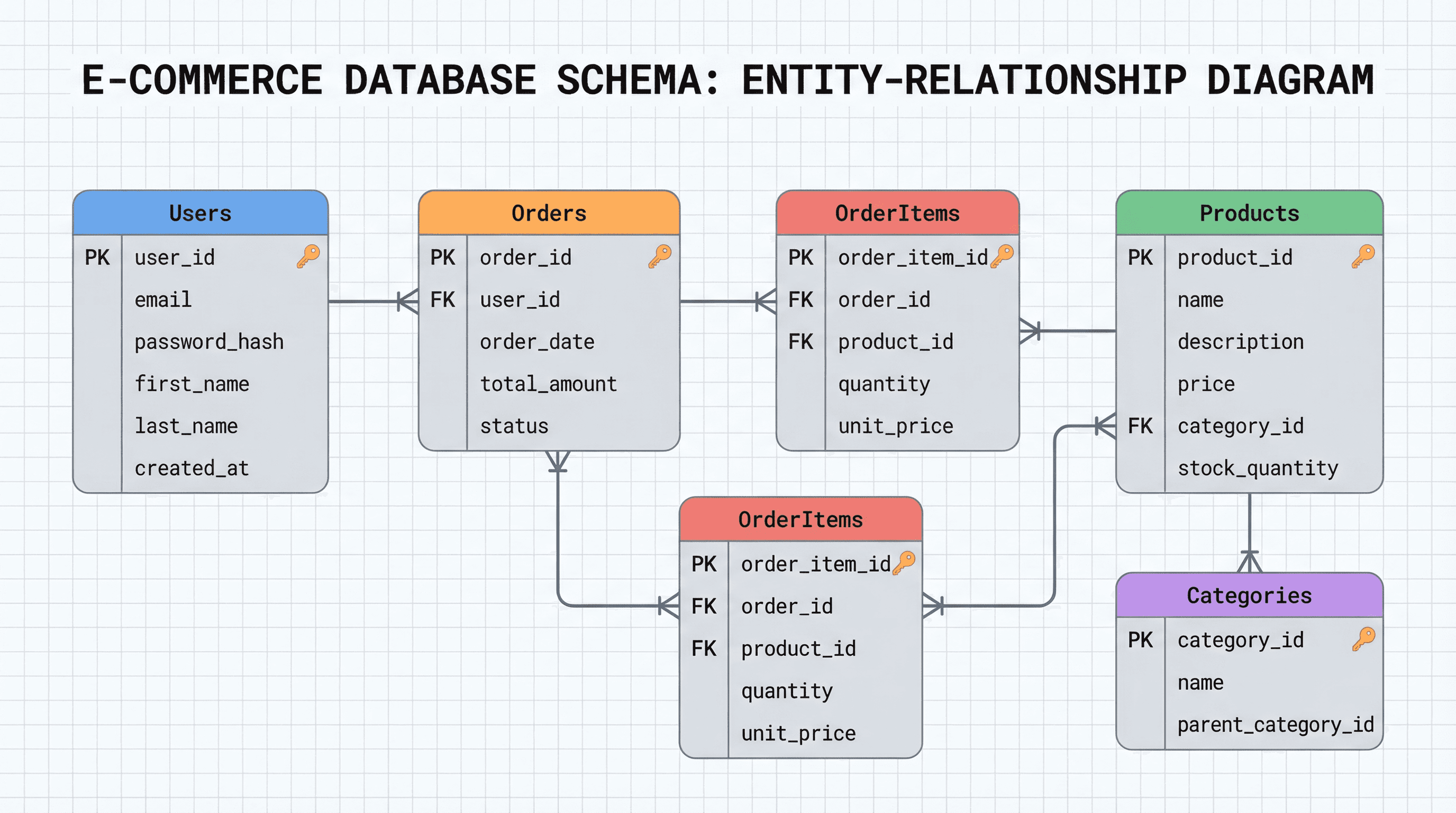
Design a slide showing an e-commerce database schema with tables and relationships. Use an entity-relationship diagram style with rounded rectangle tables in soft gray with colored header bars, primary key icons, foreign key connection lines with crow's foot notation, clean grid background, and precise technical Roboto Mono typography.
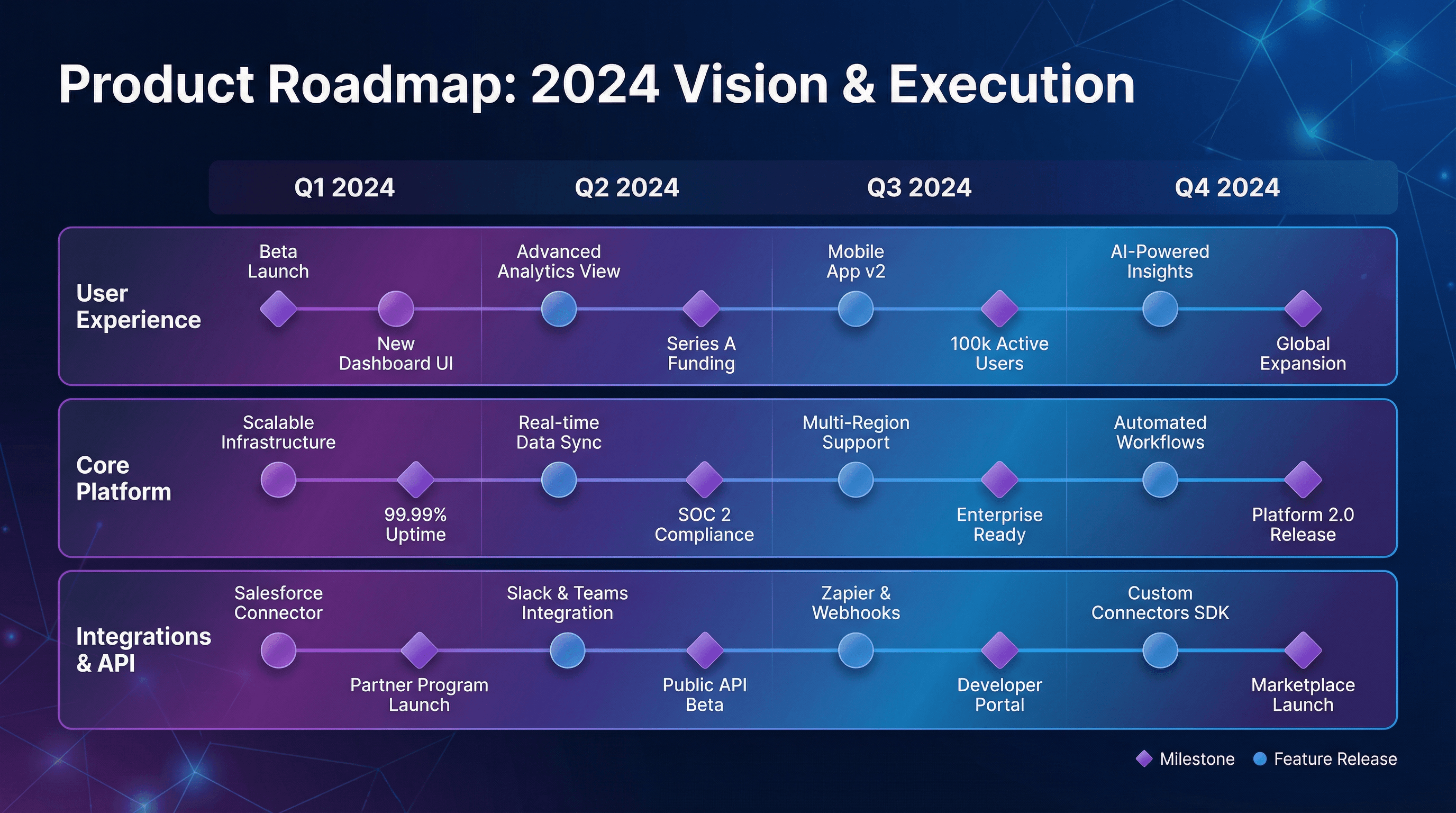
Create a quarterly product roadmap slide showing feature releases and milestones. Design in a sleek SaaS startup style with gradient purple to blue swimlanes, milestone diamonds and release circles, modern geometric shapes, clean white labels on colored tracks, subtle glassmorphism effects, and contemporary Inter or Poppins typography.
How to use these Technology Prompt Ideas for Nano Banana prompts
Welcome to the technical side of the library. This collection focuses on visualizing code structures, IT infrastructure, and those complex systems that are often difficult to explain with words alone. Browse through these examples to see how you can turn a dense architecture spec or a workflow document into a clean, readable diagram right inside your presentation slides. You can copy a prompt that looks close to what you need and simply swap out the specific labels to match your technology stack.
Start by clearly defining the visual style you need for the context of your meeting. Do you need a polished, flat vector illustration for a client pitch deck, or a rough "hand-drawn" whiteboard sketch for an internal engineering sync? Specifying the aesthetic helps the AI pick the right color palette, line weights, and icon styles to match the tone of your presentation.
Take full advantage of Nano Banana Pro's ability to render accurate text. Unlike other tools you might have used in the past, this model is built to handle specific labels, titles, and annotations correctly. Don't be vague; list exactly what you want written on your database icons, server nodes, or flow arrows. You can say things like "label the central server 'Mainframe' and the output 'Analytics Dashboard'" to get precise results.
Give direction on the layout flow to ensure the diagram makes logical sense. Telling the AI to arrange elements from "left to right" for a timeline or in a "hub and spoke" pattern for a network diagram helps structure the image correctly. If you are visualizing a process, specify the start and end points so the visual hierarchy follows the path of your data.
One of the strongest use cases for these prompts is visualizing cloud infrastructure and system architecture. Instead of spending hours dragging boxes around in a separate diagramming tool, you can generate a professional overview of your microservices or server setup directly on the slide. This is perfect for high-level overviews where you need to show stakeholders how different components interact without getting bogged down in the nitty-gritty details.
These prompts also shine when mapping out development workflows and CI/CD pipelines. You can create clear, step-by-step visualizations showing how code moves from a local commit to production deployment. It makes onboarding new engineers significantly faster when they can see the "happy path" of your release process at a glance, complete with readable labels for each stage like "Build," "Test," and "Deploy."
Work directly in Google Slides and PowerPoint — no need to learn a new tool
Never start from scratch again, just tell us what kind of presentation you want to make.
Add, remix, and rewrite your slides to fine-tune your presentation.
If you are presenting technical concepts to non-technical stakeholders, try asking for a "simplified abstraction" or "isometric 3D" style. This helps strip away the complex wiring diagrams and focuses on the high-level logic, which is usually what leadership wants to see anyway.
Use color coding instructions to make your diagrams instantly readable. You can tell Nano Banana to "use blue for all frontend components and orange for backend services." Since the model follows design instructions closely, this creates a visual shorthand that helps your audience distinguish between different parts of your stack without you having to explain it verbally.